The Enigmatic World of Cryptozoology: Unraveling Nature’s Greatest Mysteries
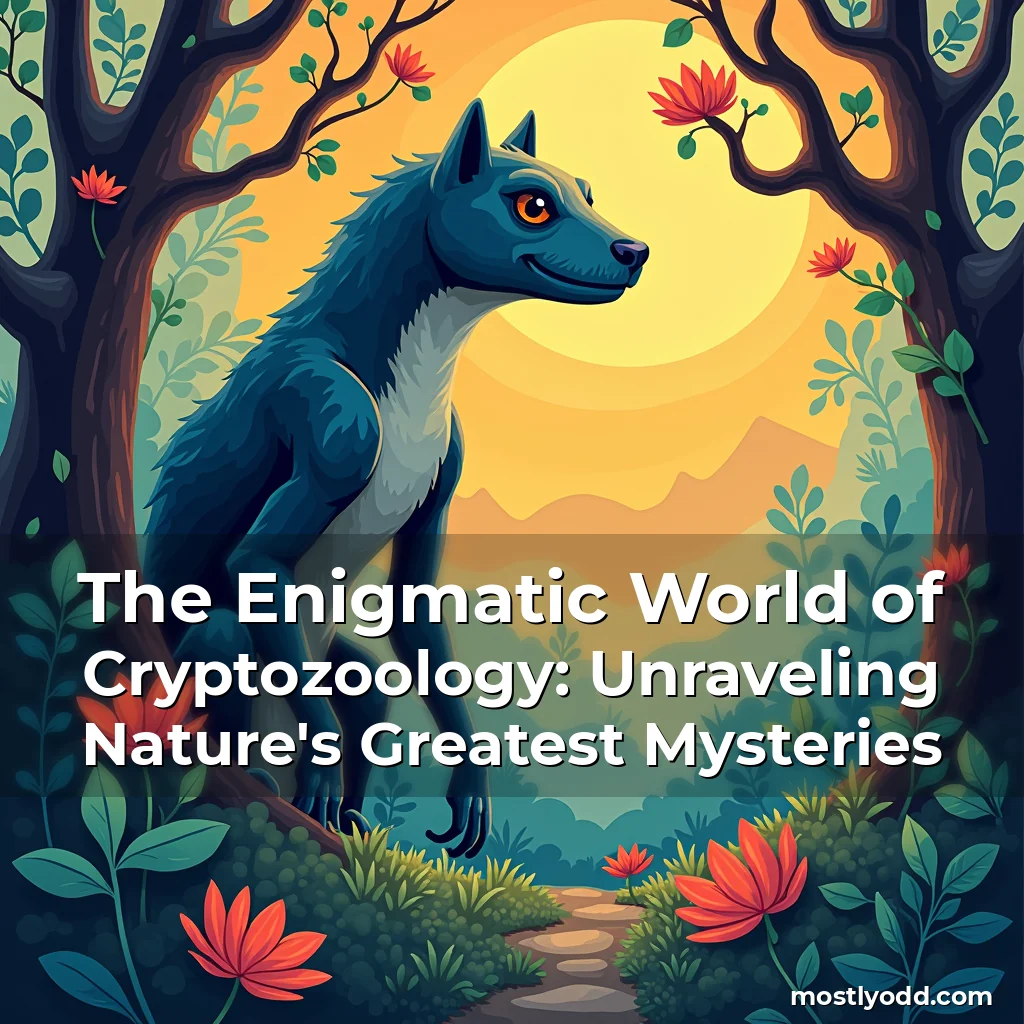
The Enigmatic World of Cryptozoology: Unraveling Nature’s Greatest Mysteries
Cryptozoology is the scientific study of hidden animals—creatures that have not yet been classified by mainstream science but are believed to exist based on eyewitness accounts, folklore, and physical evidence.
This field bridges the gap between myth and reality, challenging our understanding of the natural world while captivating imaginations across cultures and generations.
The Origins and Evolution of Cryptozoology
Cryptozoology has roots as old as human curiosity itself, tracing back to ancient civilizations that documented strange creatures in their myths and legends.
In modern times, however, cryptozoology began taking shape in the early 20th century when zoologists started investigating reports of unknown animals systematically.
Pioneers such as Ivan T. Sanderson and Bernard Heuvelmans laid foundational theories, proposing classification systems for cryptids similar to those used in traditional taxonomy.
Sanderson’s “Cryptozoological Classification” system divided creatures into categories like aquatic, land-dwelling, and aerial beings, providing structure to an otherwise chaotic field.
- Motivations: Driven by both scientific inquiry and public fascination, researchers seek to verify anecdotal sightings through rigorous investigation methods.
- Evidence Types: Includes historical records, indigenous knowledge, photographs, videos, and even DNA analysis from alleged specimens.
Famous Cryptids That Capture Global Imagination
Among the most well-known cryptids is Bigfoot, also called Sasquatch, which allegedly roams North America’s dense forests.
Reports date back centuries, including Indigenous oral traditions that describe massive, hairy hominoids inhabiting remote regions.
Physical evidence such as footprints, hair samples, and blurry photos have fueled ongoing debates about its existence despite numerous failed attempts at confirmation.
Other notable cryptids include the Loch Ness Monster, often referred to as “Nessie,” lurking beneath Scotland’s famous lake since at least the 6th century AD.
Hundreds of sightings over decades have produced compelling images and sonar readings, though conclusive proof remains elusive.
- Chupacabra: A creature reported primarily in Latin America known for attacking livestock, typically described as having spines along its back.
- Yeti: The Himalayan abominable snowman, frequently mentioned in Tibetan and Nepalese folklore, said to be a large primate-like being.
Scientific Approaches and Methodologies in Cryptozoology
Modern cryptozoology employs techniques borrowed from various scientific disciplines, aiming to apply empirical research where possible.
Researchers use geographical analysis to determine plausible habitats for suspected species, cross-referencing ecological data with local sightings.
DNA testing has become increasingly vital; environmental DNA (eDNA) sampling allows scientists to detect genetic traces left behind by organisms without direct observation.
Field expeditions often involve teams equipped with cameras, drones, audio recorders, and thermal imaging devices to gather visual or auditory evidence.
Data collection follows strict protocols ensuring credibility, distinguishing genuine findings from hoaxes or misidentifications.
- Remote Sensing Technology: Satellites and drones aid in surveying vast areas efficiently, especially useful for tracking cryptids in inaccessible locations.
- Anthropological Research: Studying native stories provides cultural context and may lead to clues about potential real-life counterparts of legendary beasts.
Controversies Surrounding Cryptozoology
Critics argue that cryptozoology lacks rigorous methodology compared to established biological sciences, leading some institutions to dismiss it outright.
Many believe that belief in cryptids stems from psychological factors rather than factual discoveries, citing pareidolia—the tendency to perceive patterns in random stimuli—as common among witnesses.
Despite these criticisms, proponents maintain that dismissing all unverified claims could stifle scientific progress by ignoring anomalies within conventional frameworks.
Some scholars suggest that certain cryptids might represent undiscovered subspecies or relict populations of extinct animals, making them worthy subjects of serious study.
- Lack of Peer Review: Unlike academic journals requiring peer review before publication, much cryptozoological work appears in less formal publications or online forums.
- Hoax Detection Challenges: Distinguishing authentic finds from deliberate fabrications requires meticulous verification processes involving experts from diverse backgrounds.
Notable Discoveries and Their Impact on Science
The discovery of the coelacanth—a fish thought extinct for millions of years—in 1938 marked a pivotal moment for cryptozoology and evolutionary biology alike.
This finding demonstrated how deeply hidden species can remain undetected until they’re accidentally discovered, reinforcing the value of continued exploration efforts worldwide.
Similarly, the okapi was once considered mythical due to descriptions matching half-horse/half-zebra hybrids until proven real during colonial times in Africa.
Such cases highlight that what seems fantastical today might very well turn out to be scientifically valid tomorrow under different conditions or technologies.
- Impact on Conservation: Identifying new species helps prioritize conservation strategies, protecting ecosystems that support biodiversity beyond currently recognized limits.
- Technological Advancements: Innovations driven by search for cryptids sometimes benefit other fields, such as improved underwater robotics developed initially for deep-sea searches.
The Role of Media and Popular Culture in Shaping Public Perception
Television shows, documentaries, and films have played significant roles in popularizing cryptozoology among wider audiences globally.
Showcases like National Geographic specials or streaming platform series bring attention to lesser-known mysteries while entertaining viewers simultaneously.
However, media portrayals occasionally sensationalize events, potentially distorting facts or creating unrealistic expectations regarding likelihoods of encounters.
Public interest generated by entertainment media often leads to increased funding opportunities for legitimate research initiatives focused on verifying credible sightings.
- Documentaries: Produce high-quality footage using advanced equipment, sometimes capturing rare wildlife previously undocumented by science.
- Reality TV Shows: Feature investigators attempting to find cryptids, combining elements of adventure with educational content about ecology and survival skills.
How You Can Participate in Cryptozoological Exploration
If you’re intrigued by cryptozoology, there are several ways to contribute meaningfully without needing extensive training or resources.
Keeping detailed notes whenever encountering unusual wildlife observations adds valuable information that professionals can analyze later.
Sharing experiences responsibly online ensures accurate dissemination of information while avoiding misinformation spread through social networks.
Joining local nature groups or following reputable cryptozoologists’ blogs keeps you updated on current investigations happening around your area.
- Volunteering: Many organizations welcome volunteers who assist in surveys, data entry tasks, or community outreach programs related to animal preservation projects.
- Photography Skills: High-resolution photography becomes essential when documenting possible sightings accurately; learning basic photo editing techniques improves documentation quality significantly.
Future Prospects for the Field of Cryptozoology
As technology advances rapidly, future prospects look promising for uncovering more secrets held by Earth’s unexplored corners.
New tools such as AI-powered image recognition software help sift through thousands of submitted pictures quickly identifying matches against known databases automatically.
Collaboration between scientists specializing in genetics, geology, meteorology, etc., enhances chances discovering novel life forms previously overlooked due to limited scope earlier studies had.
Increased global cooperation facilitates sharing knowledge seamlessly across borders enabling faster responses whenever intriguing developments arise anywhere worldwide.
- Environmental Changes: Climate change alters habitats forcing many creatures migrate unexpectedly increasing probability humans encounter unfamiliar species now.
- Space Exploration Influence: Insights gained studying extraterrestrial environments indirectly influence approaches taken exploring extreme terrestrial locations similarly hostile alien worlds would be.
Conclusion
Cryptozoology continues to fascinate people everywhere offering endless possibilities for exploration discovery amidst uncertainty surrounding many unsolved questions still lingering today.
Whether seeking truth behind legends or simply enjoying mystery inherent within nature itself, embracing curiosity remains key aspect driving forward this unique branch science continually evolving alongside humanity’s quest understand universe we inhabit together.

news is a contributor at MostlyOdd. We are committed to providing well-researched, accurate, and valuable content to our readers.
You May Also Like
✍️ About the Author