The Dark Echoes of Modern Lore: Unraveling Urban Legends Across Timeless Terrors
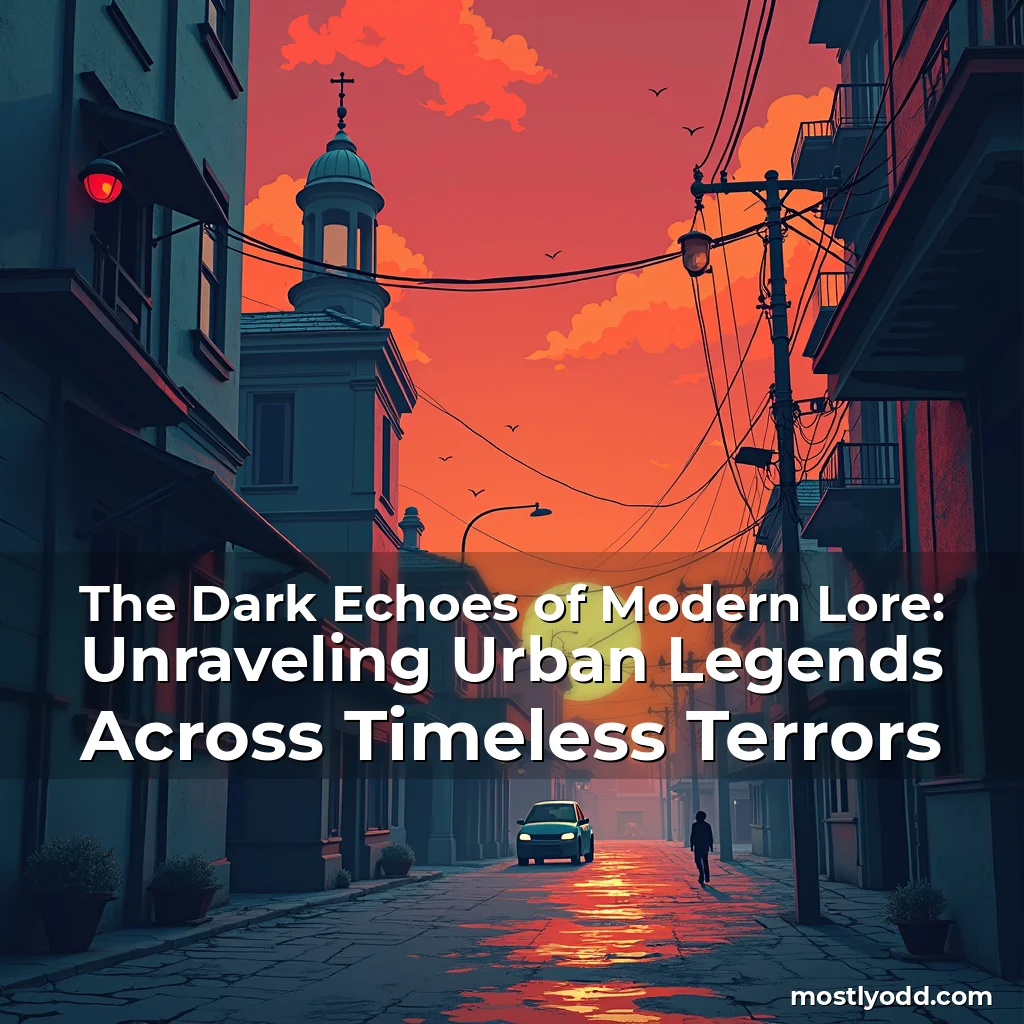
The Dark Echoes of Modern Lore: Unraveling Urban Legends Across Timeless Terrors
In an age where digital screens illuminate our nights and algorithms curate our fears, urban legends have evolved from whispered campfire tales to viral sensations that haunt social media feeds. These stories, born from the collective imagination of communities across centuries, persist not only as entertainment but also as reflections of societal anxieties.
From the chilling tale of Bloody Mary to the haunting specter of Slender Man, these narratives serve dual purposes—entertainment and cautionary warnings wrapped in enigmatic allure. They transcend cultural boundaries, adapting seamlessly to new mediums while retaining their core essence: mystery and fear intertwined with human psychology.
The Psychological Roots of Fear: Why We Can’t Look Away
Urban legends thrive because they tap directly into our primal instincts. When we hear about a killer hidden beneath a school bus or a ghostly figure lurking behind a bathroom stall, something deep within us reacts viscerally. This reaction is not merely superstition—it’s hardwired survival mechanism at play.
Psychologists suggest that these stories activate mirror neurons in our brains, creating visceral emotional responses even when we know the danger isn’t real. Our minds trick themselves into believing there could be truth in these tales, making them particularly effective at keeping us alert and cautious.
Interestingly, many urban legends contain elements that mimic real-world threats. A serial killer targeting children mirrors actual criminal behavior patterns, while haunted houses echo genuine housing issues people face daily. This mirroring effect makes the stories feel disturbingly plausible.
The power of suggestion plays a crucial role too. When someone tells you about a shadowy figure following them home after dark, your brain automatically starts scanning every corner for potential threats—even though logically, you know it was probably just a stray cat.
- Mirror Neurons: Help explain why we experience empathy and fear when hearing others’ horror stories
- Social Transmission: Oral tradition has been key in spreading these legends through generations
- Cognitive Dissonance: Creates tension between what we know (it’s fictional) and how we feel (terrified)
- Confirmation Bias: Makes believers seek out information confirming their beliefs in supernatural phenomena
The Evolution of Urban Legends Through Media Channels
As technology advanced, so did the means by which urban legends spread. From handwritten notes passed among classmates to modern-day TikTok videos, each medium left its mark on storytelling traditions. The transition wasn’t smooth; early adopters faced skepticism until the internet proved itself a powerful amplifier of folklore.
Digital platforms introduced new dimensions to legend-telling. Social media allowed rapid dissemination of stories across continents, while video formats added visual evidence that made myths seem more tangible. However, this evolution brought challenges—the line between fiction and reality became increasingly blurred.
The rise of online forums created breeding grounds for conspiracy theories masquerading as urban legends. Groups would share “evidence” supporting bizarre claims, often without critical examination. This led to the emergence of “deepfake” legends that combined real footage with fabricated narratives.
Streaming services further transformed the landscape by turning classic legends into binge-worthy series. Shows like American Horror Story: Freak Show adapted well-known urban myths into compelling television narratives, reaching audiences who might never have encountered those stories otherwise.
Viral marketing campaigns sometimes played with public perception of urban legends. Brands used scare tactics similar to those found in folklore to promote products, blurring ethical lines between entertainment and exploitation.
The interactive nature of gaming consoles opened another avenue. Players now encounter urban legend scenarios firsthand through immersive experiences that simulate being part of the story rather than simply reading about it.
The Cultural Significance of Shared Myths
Shared myths form the backbone of any culture’s identity. In ancient times, they were oral histories passed down through generations, shaping values and norms. Today, despite technological advancements, this function remains largely unchanged.
Modern urban legends continue this legacy by addressing contemporary concerns. Issues like cyberbullying find expression in tales about mysterious messages appearing on smartphones, while environmental anxiety manifests in stories about cursed landfills coming back to life.
Certain legends gain regional significance based on local contexts. For instance, Japanese yokai creatures differ significantly from Western werewolf lore, reflecting distinct cultural worldviews shaped over millennia.
These shared myths create common ground among diverse populations. Even when translated or localized, the fundamental themes remain recognizable, allowing cross-cultural understanding through familiar narrative structures.
Some legends become so deeply ingrained in a society that they influence legal systems. Laws against witchcraft persisted long after rational thought had debunked such practices, showing how myth can shape policy decisions.
Evolving Narratives: How Stories Adapt Over Generations
Urban legends are dynamic entities that change with time, much like living organisms. As societies evolve, so do the fears that fuel these stories. What frightened our grandparents may seem quaint compared to today’s digital-age horrors.
This adaptability ensures their continued relevance. Consider how tales about hitchhikers have shifted from romanticized encounters to cautionary warnings about predatory strangers, mirroring changes in transportation safety awareness and personal security concerns.
The shift from print-based distribution to digital sharing has accelerated this transformation process.
Despite these changes, certain core elements remain constant—mystery, suspense, and moral lessons embedded within terrifying frameworks. These timeless components ensure that regardless of format or context, urban legends retain their essential character.
Famous Urban Legends That Defined Generations
Throughout history, select urban legends have achieved legendary status, transcending mere storytelling to impact popular culture permanently. One such example is the legend of Bloody Mary, whose origins date back centuries yet continues to terrify young audiences worldwide.
Bloody Mary’s ritual involves standing before a mirror while reciting her name thirteen times, supposedly summoning her spectral form. While skeptics attribute sightings to psychological factors, believers claim to see bloodied faces appear during the chant.
The Slender Man phenomenon emerged relatively recently but quickly gained global infamy. Originally conceived as a creepypasta image, he rapidly evolved into a full-fledged boogeyman persona complete with backstory and fan fiction devoted to his mythology.
Stories like these demonstrate how effectively urban legends can bridge generational gaps. Parents tell their children about the same eerie figures that once terrified them, ensuring continuity in our collective nightmares.
Other notable examples include the Vanishing Hitchhiker, which warns against helping stranded drivers, and the Hookman, whose skeletal hand grips unsuspecting victims on bridges late at night. Each carries its own unique set of rules and consequences.
Even older tales maintain their grip on public consciousness. The legend of the Headless Horseman from Washington Irving’s The Legend of Sleepy Hollow still inspires Halloween decorations and themed parties annually.
The Role of Technology in Spreading and Misrepresenting Urban Legends
Technology has revolutionized how urban legends reach audiences, but it’s also created complications regarding authenticity. Digital tools allow for unprecedented levels of customization and replication, making it harder to distinguish fact from fabrication.
Smartphones equipped with cameras enable instant documentation of strange occurrences, leading some to believe they’ve captured proof of paranormal activity. Yet experts warn that camera angles, lighting conditions, and viewer interpretation heavily influence perceived evidence.
Social media algorithms prioritize sensational content, encouraging users to share exaggerated versions of events that might later be revealed as hoaxes. This creates an environment where misinformation spreads faster than verified truths.
Augmented reality applications offer new ways to interact with urban legends, transforming static images into immersive experiences. Some apps place virtual entities in real locations, blurring the line between digital entertainment and genuine encounters.
While technology expands access to urban legends, it also introduces risks. Deepfakes capable of mimicking voices and appearances threaten to weaponize these stories, using them for malicious intent rather than simple scares.
Virtual reality headsets take immersion even further, placing users inside simulated environments designed around famous legends. Though entertaining, these experiences raise questions about ethical boundaries and mental health impacts.
How to Identify Authentic vs. Fabricated Urban Legends
Distinguishing between genuine accounts and deliberate fabrications requires careful analysis of sources and context. Reliable indicators usually involve corroboration from multiple independent witnesses or historical records.
Legends originating from specific geographic regions tend to carry more weight when supported by local knowledge. Conversely, stories lacking clear provenance or featuring overly dramatic embellishments warrant closer scrutiny.
Investigating the timeline helps differentiate old traditions from recent inventions. Many enduring legends have roots stretching back hundreds of years, whereas newer ones often emerge suddenly alongside technological shifts.
Examination of cultural influences provides additional insight. Genuine urban legends frequently reflect prevailing societal concerns, unlike contrived stories crafted solely for shock value or commercial gain.
Expert consultation proves invaluable in complex cases. Anthropologists, historians, and psychologists bring specialized perspectives that help contextualize suspicious narratives within broader cultural frameworks.
Cross-referencing with known folklore databases allows comparison against established patterns, revealing whether a particular account aligns with recognized storytelling conventions or deviates dangerously towards hoax territory.
Responsible Engagement With Urban Legends
Engaging with urban legends responsibly means recognizing their dual nature—as both harmless entertainment and potentially harmful misinformation. Understanding this balance allows individuals to enjoy these stories without succumbing to undue alarmism.
Parents and educators play crucial roles in guiding younger audiences toward healthy engagement. Teaching critical thinking skills enables youth to discern fantasy from reality without losing appreciation for imaginative storytelling.
Community leaders can foster constructive discussions about urban legends, emphasizing how these tales often originate from understandable fears rather than literal threats. This approach demystifies scary stories while preserving their cultural significance.
Media creators bear responsibility for accurately representing urban legends. Responsible reporting avoids perpetuating stereotypes or promoting dangerous behaviors associated with these narratives.
Individuals should question the motives behind sharing certain stories. Are they genuinely curious about folklore, or do they aim to manipulate emotions for personal gain? Being aware of ulterior motives promotes mindful consumption habits.
Ultimately, respect for different belief systems allows coexistence between those who embrace supernatural interpretations and those who prefer scientific explanations. Mutual tolerance enriches conversations without forcing conformity onto anyone’s worldview.
Conclusion
Urban legends endure because they speak to universal aspects of the human condition—our need for mystery, our fascination with the unknown, and our inherent desire to understand the inexplicable.
Whether viewed through the lens of psychology, sociology, or media studies, these stories reveal fascinating insights about ourselves. They remind us that fear, while uncomfortable, serves important functions in keeping us vigilant and connected to our communities.
By approaching urban legends with curiosity rather than fear, we open doors to deeper understanding of both past and present cultures. Their persistence across generations attests to their intrinsic value as more than just spooky tales—they’re windows into the soul of humanity itself.
So next time you hear a chilling story, remember: it’s not just about ghosts or ghouls. It’s about us—our hopes, our fears, and the stories we choose to pass along.

news is a contributor at MostlyOdd. We are committed to providing well-researched, accurate, and valuable content to our readers.
You May Also Like


✍️ About the Author